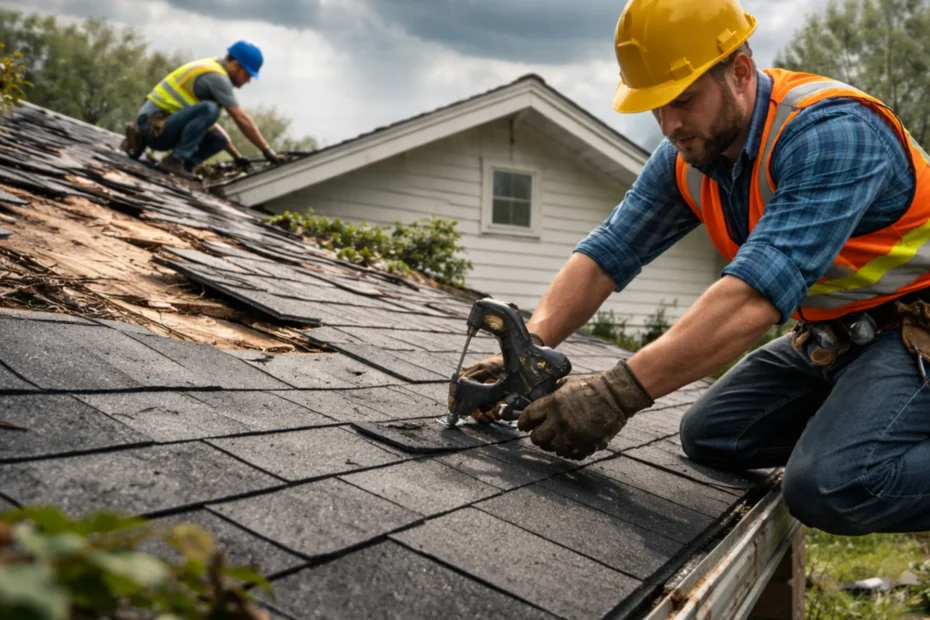
Severe weather can cause serious problems for homes, especially the roof.
Storm Damage Roofing issues often appear after heavy rain, strong winds, hail, or falling debris. When a storm hits, roofs and exterior siding can suffer cracks, leaks, or structural damage that threatens the safety of your home.
Understanding how Storm Damage Roofing occurs and knowing the right steps to repair it can help homeowners protect their property quickly. Acting fast prevents small issues from turning into expensive structural repairs.
This guide explains the warning signs, causes, repair steps, and professional solutions for dealing with storm-related roof damage.
Understanding Storm Damage and Its Impact on Roofs
Extreme weather conditions are one of the most common causes of roof deterioration. High winds can loosen shingles, hail can dent roofing materials, and heavy rain can lead to leaks.
When these problems occur, Storm Damage Roofing can weaken the entire protective structure of a house. Water intrusion may damage insulation, ceilings, and interior walls if the roof is not repaired promptly.
Storm damage may also affect siding, gutters, flashing, and roof edges. Identifying these issues early helps reduce repair costs and prevents further deterioration.
Common Signs of Storm Damage on a Roof
After a severe storm, homeowners should carefully inspect their property for damage. Some problems are visible immediately, while others develop gradually.
Typical signs of Storm Damage Roofing include:
- Missing or lifted shingles
- Dented metal roofing panels
- Broken flashing around vents and chimneys
- Granule loss on asphalt shingles
- Water stains on ceilings or walls
- Leaks in the attic
- Damaged gutters or downspouts
If these warning signs appear, it is important to schedule a professional inspection. Early detection allows repairs before major structural damage occurs.
What Causes Storm Damage to Roofing Systems?
Different weather conditions can impact roofs in different ways. Understanding the main causes helps homeowners prepare for future storms.
Strong Winds
High winds can tear shingles away or loosen roofing materials. Once shingles are missing, water can easily enter the roof structure.
Hailstorms
Hail can dent shingles, crack tiles, and damage protective roof coatings. This type of Storm Damage Roofing often leads to long-term deterioration if not repaired.
Heavy Rain
Excess rainfall can overwhelm drainage systems. When water pools on the roof, it increases the risk of leaks and interior damage.
Falling Debris
Branches or tree limbs can puncture roofing materials. This sudden impact often causes severe structural damage that requires immediate repair.
Steps to Take After Storm Damage Occurs
When a storm passes, homeowners should take several steps to protect their property and begin the repair process.
1. Perform a Visual Inspection
Look for obvious roof damage from the ground. Check for missing shingles, fallen debris, and damaged gutters.
2. Document the Damage
Take photographs of any visible problems. This documentation helps when filing insurance claims for Storm Damage Roofing repairs.
3. Prevent Further Damage
If safe to do so, cover exposed roof areas with temporary tarps. This helps prevent additional water intrusion.
4. Contact a Professional Roofing Contractor
Roofing specialists can perform a complete inspection and identify hidden issues. Professional evaluation ensures that all damage is properly repaired.
Why Professional Storm Damage Repairs Matter?
Some homeowners attempt DIY roof repairs after a storm. However, roofing systems are complex and require professional knowledge.
Hiring experts for Storm Damage Roofing repairs offers several advantages:
- Accurate damage assessment
- Safe repair procedures
- High-quality materials
- Proper sealing and waterproofing
- Compliance with building codes
Professional contractors also help with insurance claims by providing detailed inspection reports and repair estimates.
Preventing Future Storm Damage
Although storms cannot be avoided, homeowners can reduce the risk of severe damage by maintaining their roofs regularly.
Preventive strategies include:
- Scheduling yearly roof inspections
- Replacing old or worn shingles
- Keeping gutters clean
- Trimming nearby tree branches
- Reinforcing roof flashing and seals
These measures strengthen roofing systems and make them more resistant to severe weather conditions.
Regular maintenance ensures that minor problems are fixed before they become major Storm Damage Roofing issues.
Insurance and Storm Damage Claims
Many homeowner insurance policies cover roof damage caused by severe weather. Filing a claim can help reduce repair costs.
To simplify the claims process:
- Document the storm damage immediately
- Schedule a professional inspection
- Keep all repair estimates and receipts
- Communicate clearly with the insurance provider
A professional roofing contractor experienced in Storm Damage Roofing repairs can assist homeowners throughout the claim process and ensure repairs meet insurance requirements.
Severe weather can cause significant roof and exterior damage, but quick action helps minimize risks and repair costs. Recognizing the signs of Storm Damage Roofing early allows homeowners to address problems before they worsen.
From inspecting shingles to hiring professional contractors, taking the right steps ensures that damaged roofs are restored safely and efficiently.
Regular maintenance and timely repairs not only protect the structure of your home but also improve its durability during future storms.
By staying prepared and responding quickly after severe weather, homeowners can keep their roofing systems strong and protect their property from further storm damage.
FAQs
1. How soon should I inspect my roof after a storm?
You should inspect your roof as soon as it is safe after the storm passes. Early inspection helps detect damage quickly.
2. Can storm damage cause hidden roof leaks?
Yes. Even minor shingle damage can allow water to enter the roof structure, leading to hidden leaks and interior damage.
3. Should I repair storm damage myself?
Minor issues may be manageable, but professional contractors are recommended for safe and effective storm damage repairs.