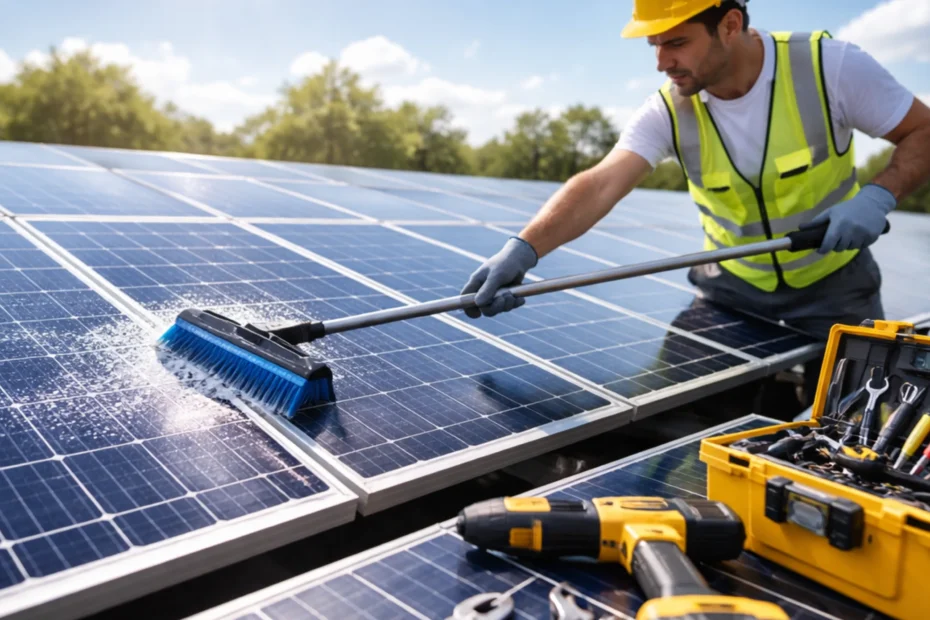
Solar panels are designed to generate clean energy for many years, but they require proper care to perform at their best. Solar maintenance plays a vital role in keeping your system efficient, safe, and long-lasting.
Without regular inspection and cleaning, dirt, debris, and technical issues can reduce energy production and affect overall system performance.
This guide explains the importance of solar maintenance, the steps homeowners should take to maintain their systems, and how routine care helps maximize solar energy output.
Why Solar Maintenance Is Important?
Solar energy systems are built to be durable, but environmental factors such as dust, bird droppings, leaves, and weather conditions can impact their efficiency over time. Proper solar maintenance helps identify small problems before they become major issues.
Regular maintenance ensures that solar panels receive maximum sunlight exposure. When panels remain clean and functional, they can generate more electricity and maintain optimal efficiency.
Another major benefit of consistent solar maintenance is extending the lifespan of your solar system. Panels that are regularly inspected and cleaned tend to last longer and perform more reliably.
Common Solar Panel Problems Without Maintenance
If solar systems are not maintained properly, several issues can arise that affect performance and safety.
Dirt and Debris Accumulation
Dust, pollen, leaves, and bird droppings can cover solar panels and block sunlight. This buildup reduces energy generation and gradually lowers system efficiency.
Electrical Connection Issues
Loose wiring or damaged connectors can interrupt energy flow and reduce system output. Identifying these issues during solar maintenance inspections prevents larger electrical problems.
Weather-Related Damage
Strong storms, heavy winds, or hail can damage panels or mounting structures. Routine checks help detect weather-related damage early.
Reduced Energy Production
One of the biggest signs that solar maintenance is needed is a noticeable drop in energy output. Monitoring system performance helps detect these changes quickly.
Essential Solar Maintenance Tips
Taking care of a solar system does not always require complicated procedures. A few simple steps can significantly improve performance and reliability.
1. Clean Solar Panels Regularly
Solar panels should be cleaned periodically to remove dust and debris. Gentle washing with water and a soft cloth usually works well.
Cleaning panels improves sunlight absorption and supports efficient energy generation.
2. Inspect Panels for Damage
Regular inspections are an important part of solar maintenance. Look for cracks, scratches, or discoloration on the panel surface.
Identifying visible damage early prevents long-term performance issues.
3. Check Wiring and Connections
Loose or damaged wires can affect electricity flow. During inspections, ensure that all cables and connectors are secure and in good condition.
Professional technicians can perform more detailed electrical checks if necessary.
4. Monitor Energy Output
Most solar systems include monitoring software that tracks energy production. If energy generation suddenly decreases, it may indicate that solar maintenance is required.
Monitoring helps detect system issues quickly and ensures consistent performance.
5. Schedule Professional Inspections
While homeowners can perform basic cleaning and checks, professional technicians provide more detailed system evaluations.
Technicians inspect electrical components, mounting structures, and inverter performance during professional solar maintenance services.
Benefits of Regular Solar Maintenance
Maintaining a solar energy system offers several long-term advantages.
Higher Energy Efficiency
Clean and properly functioning panels capture more sunlight, improving overall system performance.
Longer System Lifespan
Routine care protects components from damage and helps extend the life of solar equipment.
Reduced Repair Costs
Early detection of small problems prevents costly repairs in the future.
Reliable Energy Production
Consistent solar maintenance ensures stable electricity generation and dependable solar power for homes.
When to Schedule Solar Maintenance?
The frequency of solar maintenance depends on environmental conditions and system usage. In general, experts recommend:
- Cleaning solar panels every 6 to 12 months
- Inspecting the system after major storms
- Monitoring energy production regularly
- Scheduling professional inspections at least once a year
Homes located in dusty areas or regions with heavy pollen may require more frequent cleaning.
Solar Maintenance Safety Tips
Safety should always be a priority when caring for solar systems.
Avoid climbing onto roofs without proper safety equipment. Instead, hire professionals if the panels are difficult to reach.
Do not use harsh chemicals or abrasive materials while cleaning panels. These substances can damage protective glass surfaces.
Proper solar maintenance ensures that the system remains safe while delivering consistent renewable energy.
The Role of Professional Solar Maintenance Services
Professional technicians provide comprehensive system evaluations that go beyond simple cleaning. These services include checking inverter performance, inspecting mounting structures, testing electrical components, and ensuring system safety.
Professional solar maintenance helps detect hidden problems that homeowners may not notice. Technicians also ensure that the system operates according to manufacturer specifications.
Solar energy systems provide reliable renewable power, but they require proper care to maintain peak performance.
Regular solar maintenance ensures that panels stay clean, electrical components function correctly, and energy production remains consistent.
By combining routine cleaning, performance monitoring, and professional inspections, homeowners can protect their solar investment and maximize energy efficiency.
Proper maintenance not only extends the lifespan of solar panels but also ensures dependable, clean energy for many years.
FAQs
1. How often should solar panels be cleaned?
Solar panels should typically be cleaned every six to twelve months, depending on dust levels, weather conditions, and the surrounding environment.
2. Does solar maintenance improve panel efficiency?
Yes. Regular maintenance removes dirt and detects technical issues early, helping solar panels produce electricity more efficiently.
3. Can homeowners perform solar maintenance themselves?
Homeowners can clean panels and monitor system output, but professional inspections are recommended for electrical and technical checks.