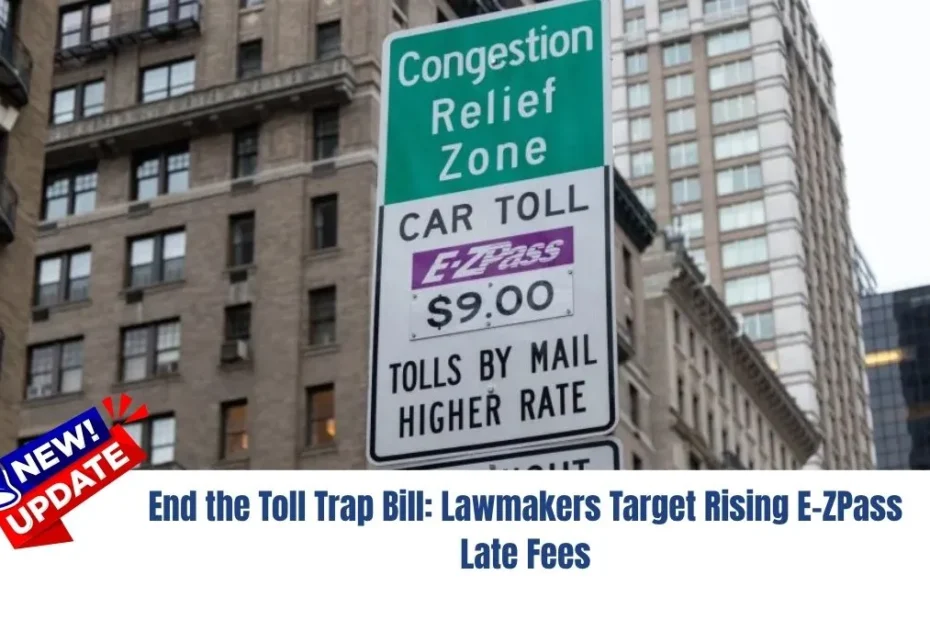
The End Toll Trap Bill is gaining attention as lawmakers in New York and New Jersey push for urgent reforms to reduce E-ZPass late fees. This new bipartisan proposal aims to protect drivers who have been hit with massive fines, sometimes reaching thousands of dollars, due to missed toll payments.
Why the End Toll Trap Bill Was Introduced
The End Toll Trap Bill was proposed after growing complaints from drivers who reported extremely high penalties linked to E-ZPass violations. Many individuals shared stories of unexpected bills that quickly escalated due to late fees and penalties.
Reports revealed that some drivers were unaware of their violations until their vehicle registrations were suspended, creating serious financial and personal stress.
Public Complaints and Rising Concerns
- Hundreds of drivers reported unexpected toll fines
- Some bills reached tens of thousands of dollars
- Many drivers claimed they received little or no notice
- Financial hardship increased due to compounded late fees
These concerns led lawmakers to push forward the End Toll Trap Bill to bring fairness and transparency.
Current System and Agency Response
Authorities such as the Metropolitan Transportation Authority (MTA) and the Port Authority of New York and New Jersey defended the system.
- The MTA stated that drivers in many cases passed toll points multiple times without paying
- Officials emphasized that drivers who pay on time do not face penalties
- The Port Authority confirmed a $50 fee per violation, a policy in place since 2009 and upheld in 2022
However, lawmakers argue that this system is outdated and does not reflect modern capabilities.
Key Changes Proposed in the End Toll Trap Bill
The End Toll Trap Bill introduces several important reforms designed to protect drivers and ensure fairness.
1. Limiting Late Fees
- No penalties for drivers with fewer than three violations within 90 days
2. Cost-Based Fee Structure
- Fees must reflect the actual processing cost
- Prevent agencies from using penalties as a revenue source
3. Creation of a Task Force
- Investigate how toll systems operate
- Review how violations and fees are calculated
- Explore amnesty options for drivers with large outstanding balances
Lawmakers Demand Transparency
New York State Senator Monica Martinez criticized authorities for imposing excessive fines on residents.
New Jersey Assemblyman Paul Kanitra emphasized the need to closely examine:
- Toll processing systems
- Violation tracking methods
- Fee calculation practices
Lawmakers also raised concerns about a lack of data transparency, stating that agencies did not provide requested information about how fees are structured.
Concerns About System Misuse
Some lawmakers suspect that toll authorities may be misusing penalty revenue.
- Questions raised about funding administrative costs and salaries
- Concerns that fines may be used beyond actual operational needs
The End Toll Trap Bill aims to uncover these issues and ensure accountability.
Next Steps for the End Toll Trap Bill
The End Toll Trap Bill has already been introduced in both state legislatures.
Lawmakers are urging citizens to:
- Contact their representatives
- Support fast-tracking of the bill
- Demand fair toll policies
There is strong momentum behind the End Toll Trap Bill, with officials hoping to pass it quickly.
The End Toll Trap Bill represents a major effort to reform the toll system in New York and New Jersey. By limiting excessive fees, improving transparency, and ensuring charges reflect real costs, the bill could provide significant relief to thousands of drivers. As concerns over unfair penalties continue to grow, this legislation may mark a turning point in how toll violations are handled. If passed, the End Toll Trap Bill could restore trust in the system and prevent drivers from falling into financial distress due to outdated and aggressive fee practices.