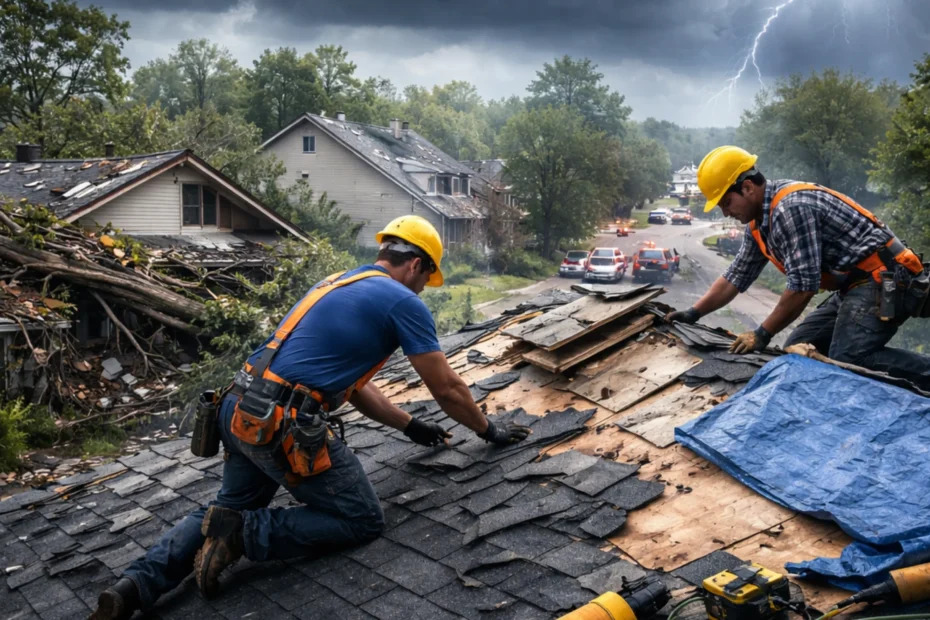
Severe weather can cause serious storm damage roof issues that threaten the safety and structure of your home.
High winds, heavy rain, hail, and flying debris often weaken roofing materials and siding. When this happens, homeowners must act quickly to prevent further structural problems and costly repairs.
Understanding how storm damage roof problems occur and how professionals handle repairs helps homeowners respond faster after severe weather.
Proper inspection, timely repair, and expert roofing services ensure your property stays protected from additional damage.
What Causes Storm Damage to Roofs?
Extreme weather conditions can affect roofs in many ways. Different types of storms produce different kinds of damage.
Strong winds may loosen or remove shingles entirely, exposing the underlying structure. Hailstorms can crack or dent roofing materials, weakening their ability to protect the home. Heavy rain can force water through small openings and cause leaks.
When these issues occur, storm damage roof conditions may worsen quickly if repairs are delayed. Even minor damage can lead to moisture problems, mold growth, and interior ceiling stains.
Storm debris such as tree branches or airborne objects can also puncture roofing surfaces. This type of damage requires immediate attention because exposed areas allow water to enter the home.
Common Signs of Storm Damage
After severe weather passes, homeowners should check for warning signs that indicate possible roof damage.
Missing or curled shingles are one of the most visible indicators. Cracked shingles or granule loss may also appear after hailstorms. Water stains on ceilings or attic insulation often signal hidden leaks.
Gutters filled with roofing granules can suggest the roof surface has deteriorated during the storm. Damaged flashing around chimneys or vents is another common problem.
If any of these signs appear, it may indicate storm damage roof problems that require professional inspection.
Why Immediate Roof Repair Matters?
Ignoring roof damage can quickly lead to bigger structural problems. Water infiltration may weaken wood framing, damage insulation, and cause mold growth inside walls.
Timely repairs prevent these issues from spreading and help maintain the structural stability of your home. Addressing storm damage roof problems early also reduces the risk of expensive restoration work later.
Insurance claims are another reason quick repairs are important. Documenting damage early makes it easier for homeowners to receive coverage for repair costs.
Professional roofing contractors often provide inspection reports and photographs to support insurance claims related to storm damage roof repairs.
Steps Professionals Take to Repair Storm Damage
Repairing storm damage usually follows a structured process designed to restore the roof safely and efficiently.
1. Detailed Roof Inspection
The first step is a complete inspection. Roofing experts examine shingles, flashing, gutters, vents, and structural components. This inspection helps identify all areas affected by storm damage roof conditions.
2. Temporary Protection
If the roof has major openings, contractors may install emergency tarps or temporary coverings. This prevents additional rainwater from entering the home while permanent repairs are prepared.
3. Damage Assessment and Planning
After inspection, professionals create a repair plan based on the severity of the storm damage roof issues. Minor problems may require replacing a few shingles, while larger damage could involve partial roof replacement.
4. Roof Repair or Replacement
During the repair phase, damaged shingles, flashing, or structural components are removed and replaced. Contractors ensure the repaired area blends with the existing roof and restores full weather protection.
5. Final Safety Inspection
Once repairs are complete, a final inspection confirms that the storm damage roof has been fully repaired and the home is secure again.
How Professional Roofing Services Help?
While some homeowners may attempt minor fixes themselves, professional roofing services provide several important advantages.
Experienced contractors understand how different roofing materials respond to severe weather. They can identify hidden damage that may not be visible from the ground.
Professional tools and safety equipment also allow roofers to perform repairs safely. This reduces the risk of accidents and ensures repairs meet industry standards.
Most importantly, experts restore storm damage roof areas properly so that the home remains protected against future storms.
Tips to Prevent Future Storm Damage
Although storms cannot be avoided, homeowners can take several steps to reduce the risk of roof damage.
Regular roof inspections help identify weak areas before storms occur. Cleaning gutters ensures proper water drainage during heavy rain. Trimming nearby tree branches prevents them from falling onto the roof during strong winds.
Installing impact-resistant roofing materials may also provide better protection against hail and wind damage.
Preventive maintenance significantly lowers the chances of severe storm damage roof problems in the future.
Storms can cause serious structural problems if roof damage is not addressed quickly. Acting fast after severe weather helps prevent water infiltration, mold growth, and expensive repairs.
By identifying warning signs early and contacting professional roofing contractors, homeowners can restore safety and protect their property.
Timely inspection and expert repair ensure that storm damage roof issues are resolved effectively, keeping your home secure against future weather conditions.
FAQs
1. How do I know if my roof has storm damage?
Common signs include missing shingles, dents from hail, roof leaks, or debris damage. A professional inspection confirms the extent of damage.
2. Should I repair storm damage immediately?
Yes. Quick repairs prevent water damage, structural issues, and higher repair costs later.
3. Can insurance cover storm damage roof repairs?
Many homeowner insurance policies cover storm-related roof damage, but documentation and professional inspection are usually required.