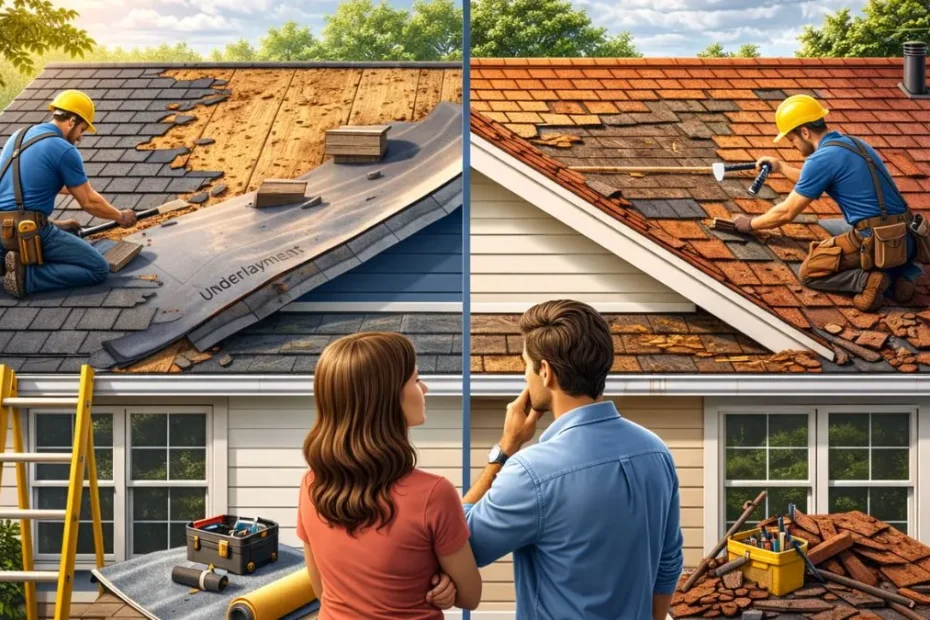
Your roof is one of the most important parts of your home. It protects your property from rain, snow, wind, and extreme temperatures. Over time, roofs naturally wear out and may develop problems such as leaks, broken shingles, or structural damage. When these issues appear, homeowners often face a common question: should you repair your roof or replace it completely?
Choosing between roof repair and roof replacement depends on several factors such as the age of the roof, the extent of damage, repair costs, and long-term durability. Understanding the differences between these two options can help you make the best decision for your home and budget.
In this guide, we will explain the key differences between roof repair and roof replacement, when each option is recommended, and how to decide which solution is right for your property.
Understanding Roof Repair
Roof repair involves fixing specific damaged areas of the roof instead of replacing the entire roofing system. This option is usually recommended when the damage is minor or limited to certain sections.
Common roof repairs include:
- Fixing small leaks
- Replacing missing or damaged shingles
- Repairing flashing around chimneys or vents
- Sealing cracks and small gaps
- Fixing minor structural issues
Roof repairs are typically faster and less expensive than a full roof replacement.
When Roof Repair Is the Best Option
Roof repair is usually suitable when the roof is still relatively new and the damage is limited.
Situations where repair may be appropriate include:
- A few shingles are missing or damaged
- Minor leaks caused by storms
- Small areas of wear and tear
- Localized flashing damage
If the roof structure is still strong, repairs can extend its lifespan by several years.
Understanding Roof Replacement
Roof replacement involves removing the entire existing roof and installing a new roofing system. This option is recommended when the roof has severe damage or has reached the end of its lifespan.
During roof replacement, contractors remove the old shingles and inspect the roof deck before installing new materials.
Roof replacement typically includes:
- Removing old roofing materials
- Repairing roof decking if necessary
- Installing underlayment
- Installing new shingles or roofing materials
While this process is more expensive than repair, it provides a completely new roofing system that can last decades.
When Roof Replacement Is Necessary
There are situations where repairing the roof is no longer effective.
Roof replacement is recommended when:
- The roof is 20–30 years old
- There are widespread leaks
- Large areas of shingles are missing
- Structural damage is present
- The roof has experienced severe storm damage
In these cases, replacing the roof may be more cost-effective than repeated repairs.
Roof Repair vs Roof Replacement: Key Differences
Understanding the differences between these two options can help homeowners make informed decisions.
| Factor | Roof Repair | Roof Replacement |
|---|---|---|
| Cost | Lower upfront cost | Higher upfront cost |
| Time Required | Usually 1 day | Several days |
| Lifespan Impact | Extends current roof life | Provides brand new roof |
| Best For | Minor or localized damage | Severe or widespread damage |
| Long-Term Value | Temporary solution | Long-term investment |
Both options have advantages depending on the condition of your roof.
Cost Considerations
Cost is often the biggest factor when choosing between roof repair and replacement.
Roof Repair Costs
Roof repair costs vary depending on the type of damage and roofing material.
Typical repair costs may include:
- Small leak repairs
- Shingle replacement
- Flashing repairs
These repairs are generally affordable and can solve immediate problems.
Roof Replacement Costs
A full roof replacement requires more materials and labor, making it a larger investment. However, it can prevent repeated repair costs in the future.
Although replacement costs more initially, it often provides better long-term value for older roofs.
Roof Age and Condition
The age of your roof plays a major role in deciding whether to repair or replace it.
Most roofing materials have an average lifespan:
| Roofing Material | Average Lifespan |
|---|---|
| Asphalt Shingles | 20–25 years |
| Metal Roofing | 40–70 years |
| Clay Tiles | 50–100 years |
| Wood Shingles | 20–30 years |
If your roof is approaching the end of its expected lifespan, replacement may be the better option.
Warning Signs Your Roof Needs Attention
Homeowners should regularly inspect their roofs to identify problems early.
Common warning signs include:
- Water stains on ceilings
- Missing or curled shingles
- Moss or algae growth
- Sagging roof sections
- Visible daylight through attic boards
These signs indicate that your roof may need repairs or possibly replacement.
Benefits of Roof Repair
Roof repair offers several advantages when damage is limited.
Key benefits include:
- Lower cost compared to replacement
- Quick repair process
- Minimal disruption to your home
- Extends roof lifespan
Repairing the roof can be a practical solution for newer roofs with minor issues.
Benefits of Roof Replacement
Although more expensive, roof replacement offers several long-term advantages.
Benefits include:
- Improved home protection
- Increased property value
- Better energy efficiency
- Long-lasting roofing materials
A new roof also improves the overall appearance of your home.
Professional Roof Inspection Is Important
Before deciding between repair and replacement, homeowners should schedule a professional roof inspection.
Roofing experts can:
- Identify hidden damage
- Estimate repair costs
- Determine remaining roof lifespan
- Recommend the best solution
Professional inspections help prevent costly mistakes and ensure your home stays protected.
Choosing between roof repair and roof replacement depends on several factors including the age of the roof, the extent of damage, and long-term financial considerations. Minor issues such as small leaks or a few missing shingles can often be fixed through repairs, allowing homeowners to extend the life of their current roof.
However, when the roof has reached the end of its lifespan or suffers from widespread damage, replacing it entirely may be the best investment. A new roof provides stronger protection, improves energy efficiency, and increases property value.
By carefully evaluating the condition of your roof and consulting with professional roofing experts, you can choose the solution that best protects your home and budget.
FAQs
1. How do I know if my roof needs repair or replacement?
If the damage is minor and the roof is relatively new, repairs are usually enough. Older roofs with widespread damage often require replacement.
2. Is roof repair cheaper than replacement?
Yes. Roof repair usually costs much less than full replacement, but replacement offers longer-lasting protection.
3. How long does a roof replacement take?
Most roof replacements take 1 to 3 days, depending on the size of the roof and weather conditions.